Sep 16th, 2026
Carr Workplaces
7 Home Office Limits That Stall Remote Team Growth
Jul 22nd, 2026 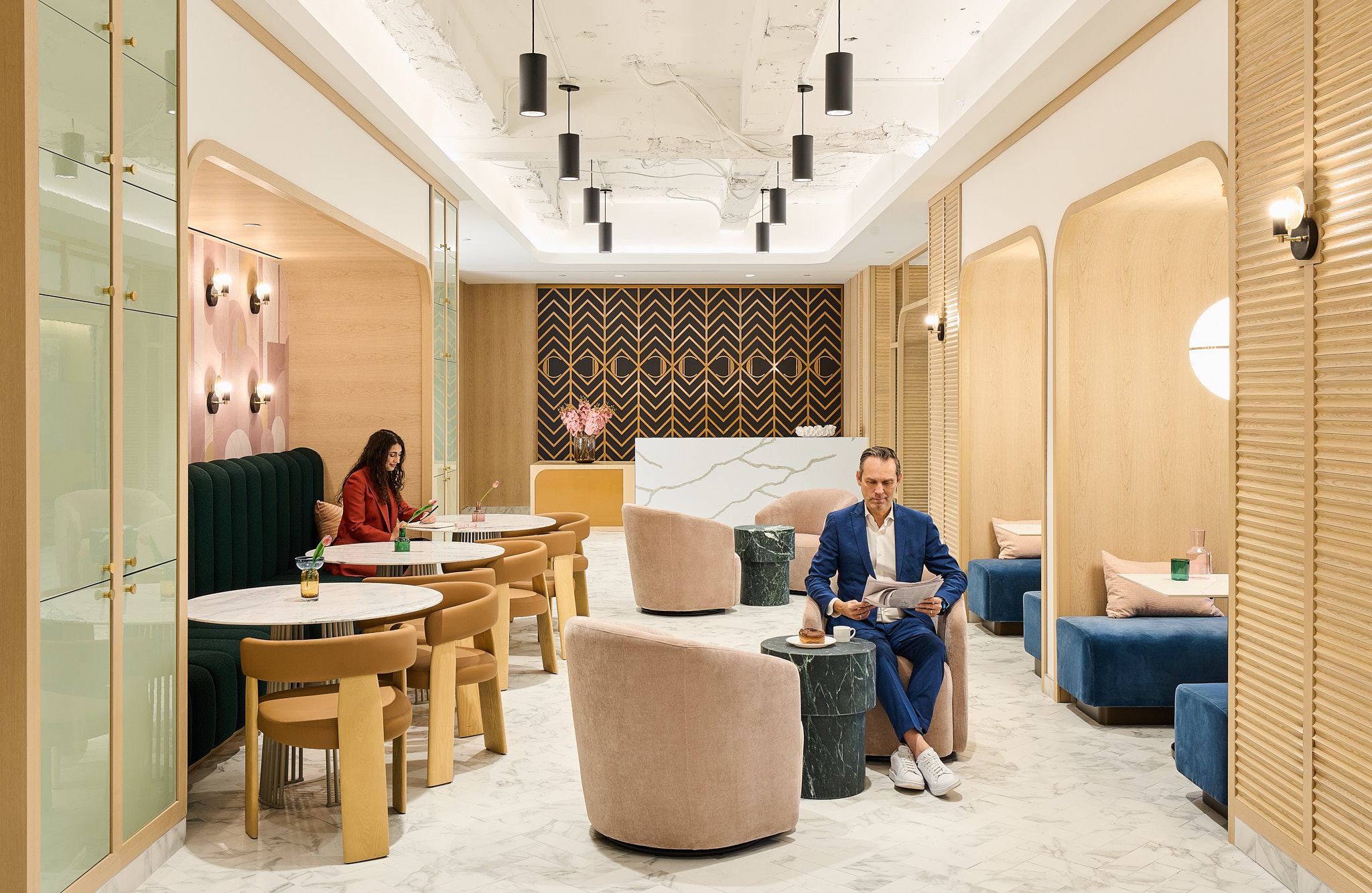
Home offices stall remote team growth at seven predictable points: there is nowhere professional to meet clients, the business address is a home address, home networks cannot meet client or compliance standards, new hires have no way to learn by proximity, focus degrades as call volume rises, the company has no physical presence in markets where it sells, and there is no gradual path to more space. Each limit has a fix that does not require a traditional lease — professional meeting rooms, a commercial business address, managed and secured Wi-Fi, and private offices that expand as headcount grows.
Why do home offices stop working as a team grows?
A home office works because it is free and immediate. It stops working for the same reasons: nothing about it scales, and none of it is under the company’s control. A solo founder absorbs those constraints easily. A five-person team absorbs them at a cost. A fifteen-person team cannot absorb them at all.
The seven limits below are the specific points where that breaks down.
The 7 limits at a glance
| # | Limit | Signal you’ve hit it | Fix |
|---|---|---|---|
| 1 | No professional space to meet clients | Meetings default to coffee shops or video | On-demand meeting rooms |
| 2 | Business address is a home address | Home address on the website and public filings | Commercial business address |
| 3 | Home networks can’t meet security standards | Client security questionnaires stall deals | Managed, firewalled office network |
| 4 | New hires can’t learn by proximity | Onboarding takes months, not weeks | Shared team space |
| 5 | Focus degrades as volume rises | Calls collide with household noise | Private office with a door |
| 6 | No presence in target markets | Prospects ask “where are you based?” | Multi-market workspace network |
| 7 | No gradual path to more space | Growth means a lease or nothing | Flexible terms that scale monthly |
1. There is nowhere professional to meet a client
The limit: A home office cannot host a client, a candidate, or an investor. Every meeting that matters gets pushed to a coffee shop, a restaurant, or a video call — regardless of whether that setting suits the conversation.
The signal: The team avoids in-person meetings not because they’d be less effective, but because there is nowhere to hold them.
The fix: Book meeting rooms on demand rather than renting a conference room full-time. A growing business does not need a boardroom 30 days a month to use one four times a month.
Carr Workplaces offers meeting rooms bookable by the hour or full day, with Wi-Fi, presentation displays, conference phones, and whiteboards included, and beverage or catering service available on request.
2. The business address is a home address
The limit: When a company has no commercial address, the founder’s home address becomes the business address by default — on the website, on state registrations, on invoices, in Google Business Profile, and in every contract.
The signal: A prospect can find where the founder sleeps in under a minute.
The fix: A commercial business address separates the company from the household. It resolves three problems at once — privacy exposure on public filings, the credibility gap a residential address creates with clients and banks, and local search visibility, which depends on a verifiable commercial location.
Carr Workplaces business address plans include mail and package handling, mail forwarding and scanning, and access to the wider network of centers.
3. Home networks cannot meet client or compliance standards
The limit: A consumer router in a spare bedroom is not a controlled environment. For companies in legal, financial, healthcare, government contracting, or any field with client security requirements, that becomes a commercial obstacle rather than an IT preference.
The signal: A client security questionnaire arrives and nobody can answer the network questions honestly.
The fix: Work from a network that was built to be defensible. Carr Workplaces provides high-speed Wi-Fi with a fully managed and supported firewall, backed by on-site and remote IT support, along with 24/7 building security, professional-grade cleaning, and a business center for printing, scanning, and shredding.
This is the limit most often discovered late — usually during a deal, not before one.
4. New hires cannot learn by proximity
The limit: Distributed teams onboard slowly because the fastest form of learning — overhearing how an experienced colleague handles a call, asking a two-second question — does not exist remotely. Every question becomes a scheduled meeting or a message that waits.
The signal: New hires take months to reach the productivity that used to take weeks, and senior people spend their days answering questions asynchronously.
The fix: Shared physical space for the periods when it matters most. Many distributed teams work remotely by default and gather in person for onboarding weeks, quarterly planning, and project sprints.
Carr Workplaces offers team space and full floor offices for teams of 15 or more, fully furnished and move-in ready, with private conference rooms and collaborative areas included.
5. Focus degrades as call volume rises
The limit: A home office is a shared room in a shared building. As a business grows, call volume, deadline pressure, and the number of hours worked all rise — and the workspace does not change to accommodate any of it.
The signal: Calls get scheduled around household noise. Deep work happens early in the morning or late at night because those are the only quiet hours available.
The fix: A private office with four walls and a lockable door. Carr Workplaces private offices include 24/7 access, customizable furniture, and business services — phone, internet, copies, prints, and scans — included in the rate.
For teams that don’t need a full-time office, day offices and dedicated desks provide the same enclosure on flexible terms.
6. There is no physical presence in target markets
The limit: A fully remote company can sell anywhere in theory. In practice, buyers in regulated industries, government contracting, and enterprise procurement still ask where a vendor is based — and a company with no presence in the market it is selling into competes at a disadvantage.
The signal: Deals in a target city stall at the “can we meet?” stage.
The fix: Buy access to multiple markets rather than real estate in one. Carr Workplaces operates 20 locations across the United States, with meeting rooms, day offices, and event spaces, in Washington, D.C.; Northern Virginia; Maryland; New York; Chicago; Los Angeles; San Francisco; Orange County; and Indiana. The Community Center Club app lets members book workspace across that network on the go.
7. There is no gradual path to more space
The limit: This is the limit underneath the other six. From a home office, the only visible next step is a commercial lease — three to ten years, a security deposit, build-out, furniture, and IT, committed before the headcount that justifies it exists.
The signal: The team has outgrown the current setup, and the only options on the table are “stay” or “sign something for five years.”
The fix: A workspace provider whose products form a ladder rather than a cliff. At Carr Workplaces, a business can start with a day pass or a business address, move to a dedicated desk, take a private office, add offices as the team grows, and reach a full floor — without changing providers or renegotiating a lease each time.
| Stage | Typical setup |
|---|---|
| Solo, fully remote | Business address + meeting room hours |
| Occasional in-person | Day pass or day office |
| Consistent home base | Dedicated desk |
| Small team | Private office |
| 15+ people | Full floor office |
The point is that each step is reversible and each one is small enough to take before it is urgent.
Frequently Asked Questions
When should a remote team stop working from home offices?
When the home setup starts costing revenue, credibility, or talent — typically when client meetings have nowhere to happen, hiring stalls, or security requirements can’t be met. None of these require a lease to fix.
Can a remote team keep working remotely and still have an office?
Yes. Many distributed teams work remotely by default and use flexible workspace for the things remote work does poorly — client meetings, onboarding, and quarterly planning.
What’s the difference between a coworking space and a private office?
Coworking is shared open space, either as an unreserved seat or a reserved dedicated desk. A private office is enclosed, lockable space assigned to one business.
Do we need a full-time office to meet clients professionally?
No. Meeting rooms can be booked by the hour or day, or bundled as a monthly package of hours, so the professional setting is available when it’s needed and costs nothing when it isn’t.
What should a growing team look for in a flexible workspace provider?
Term flexibility in both directions, address quality, what’s genuinely included versus billed as extras, multi-market access, an on-site team, and a growth path from desk to private office to full floor within the same provider.
Find space that grows with the team
Carr Workplaces offers private offices, team space, meeting rooms, coworking, and business addresses across 20 locations nationwide. Find your workplace or browse locations.